.svg)



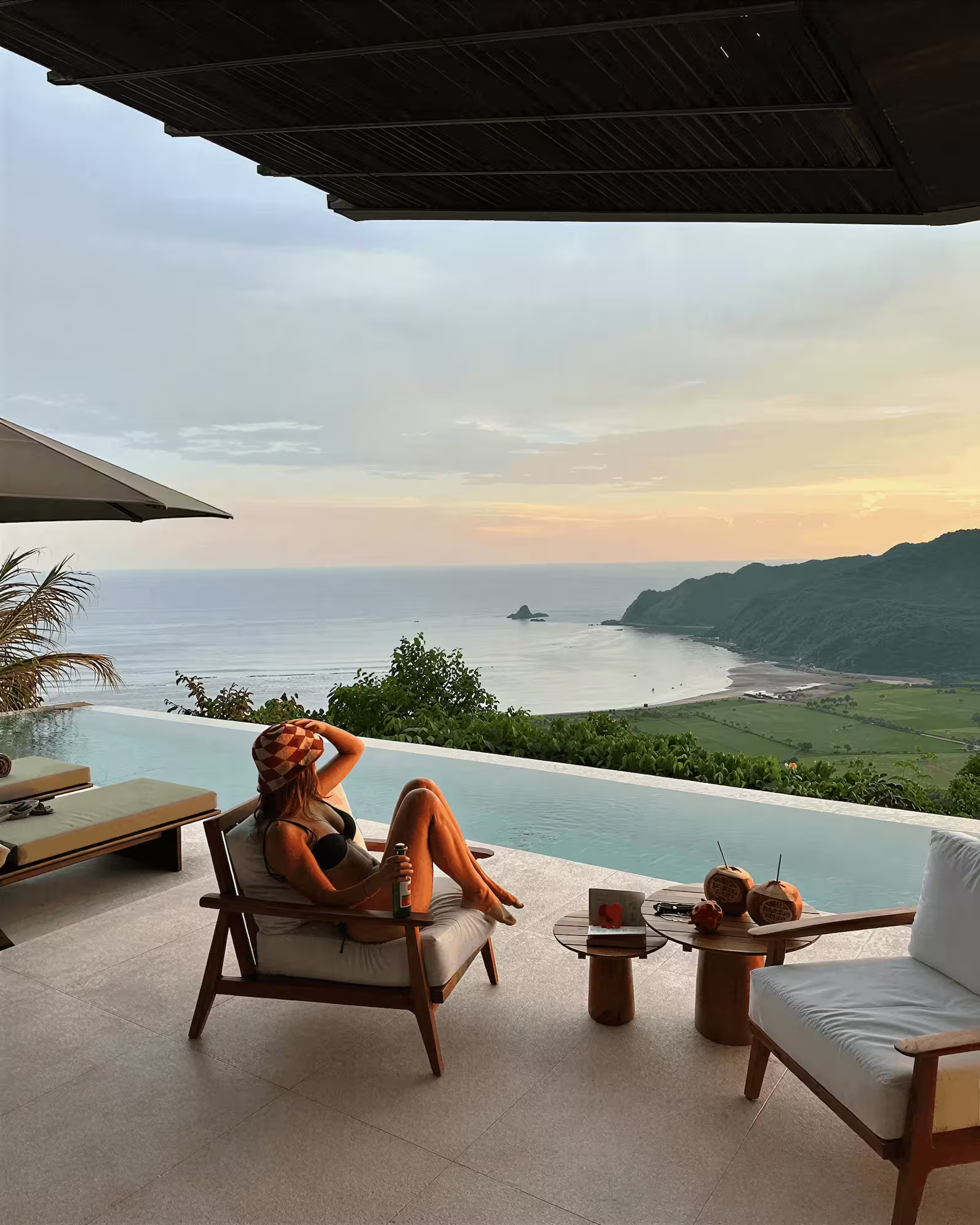
For decades, Bali has been the island that people dreamed about.
It was the place of surf trips, yoga retreats, barefoot villas, beach clubs, rice fields, design hotels and long lunches that somehow turned into sunset dinners. For many people, Bali was their first experience of Southeast Asian island living. It opened the door to a different rhythm of life.
And Bali is still extraordinary.
It remains one of the most culturally rich, commercially sophisticated and internationally recognised destinations in the world. Its food scene is world-class. Its hospitality industry is mature. Its creative energy is undeniable. For many people, Bali will always hold a special place.
But something has changed.
Over the past few years, more people have started asking a different question.
Not “Should I go to Bali?”
But:
“Is there somewhere that still feels like Bali used to feel?”
Increasingly, that question leads them east.
To Lombok.
Bali is mature. Lombok is emerging.
The comparison between Bali and Lombok is often oversimplified.
It is not that one island is good and the other is bad. That is lazy thinking. Bali and Lombok are at different stages of their development cycle.
Bali is a mature global destination. It has scale, infrastructure, brand recognition, international schools, coworking spaces, wellness centres, beach clubs, restaurants, real estate agents, villa operators and a large foreign resident community.
That maturity creates convenience.
It also creates pressure.
In the most popular parts of Bali, buyers are now dealing with higher land prices, heavier traffic, denser development, more competition, tighter availability and a lifestyle that can feel busier than the one many people originally came looking for.
Lombok is earlier in the story.
South Lombok still has open hills, wide beaches, dramatic bays, surf breaks, fishing villages, quiet roads and a sense of space that is becoming increasingly rare in Southeast Asia’s better-known destinations.
That does not make Lombok better for everyone.
It makes it different.
And for a growing number of lifestyle buyers, that difference is exactly the point.
The search for space
One of the first things people notice when they arrive in South Lombok is the space.
The beaches feel wider. The roads feel quieter. The hills still frame the coastline. The landscape has not yet been filled in by layers of development.
In Bali, many of the most desirable areas have become intensely built up. In Canggu, Seminyak, Pererenan and parts of Uluwatu, the pressure of popularity is visible: traffic, villas, cafés, construction sites, signage, beach clubs and constant movement.
For some people, that energy is exciting.
For others, it is exactly what they are trying to escape.
Lombok offers a different pace.
There is room to breathe. Room to move. Room to build with more sensitivity to the landscape. Room for developments that are not simply trying to maximise every square metre, but to create a genuine connection between architecture, nature and daily life.
That sense of space is becoming a luxury in itself.
Not marble. Not chandeliers. Not imported finishes.
Space.
Air.
Light.
A morning where you can hear the ocean before you hear traffic.
A more natural rhythm
Lombok’s appeal is not only visual. It is rhythmic.
Days in South Lombok tend to begin early. Fishermen move before sunrise. Surfers check the tide. Cafés open slowly. The roads come alive, but not all at once. There is a softer pace to the morning.
For many people looking at property here, that rhythm matters.
They are not simply searching for a villa. They are searching for a way of living that feels less compressed.
This is one of the reasons Lombok is attracting people who have already spent time in Bali. They understand Indonesian island life. They like the warmth, the informality, the food, the climate and the sense of possibility. But they are looking for somewhere with more openness and less saturation.
Kuta Lombok, in particular, sits at an interesting point in that evolution.
It has enough life to feel connected: restaurants, cafés, gyms, surf schools, small hotels, boutique stays and a growing international community. But it still has access to empty beaches, open roads, hills, quiet corners and a coastline that feels expansive.
That balance is rare.
Surf has always led the way
In many coastal destinations, surfers arrive first.
They are usually the early readers of a place. They find the breaks, stay longer than expected, meet local communities, tell friends, come back, and slowly the wider world begins to notice.
Lombok has been on the surf map for a long time.
The south coast offers a range of waves, from beginner-friendly beach breaks to more serious reef setups. Places like Gerupuk, Are Guling, Mawi, Selong Belanak and Ekas have helped define South Lombok’s reputation as a surf destination.
But the story is no longer only about surfing.
What is happening now is broader.
The surf lifestyle has created the base layer: nature, movement, water, community and international awareness. Around that, a wider lifestyle ecosystem is beginning to form.
Cafés. Restaurants. Yoga. Gyms. Wellness. Boutique hotels. Design-led villas. Remote work. Families. Investors. Entrepreneurs. People who want more than a holiday, but are not looking for a city.
That is the shift.
Lombok is moving from a surf destination to lifestyle destination.
Wellness is becoming part of property value
The idea of luxury has changed.
For a long time, luxury property was defined by size, finishes and exclusivity. Bigger villas. More marble. Higher walls. Private everything.
That still exists, but a new kind of buyer is emerging.
This buyer cares about how a place makes them feel.
They want to move their body. Sleep well. Eat better. Spend time outside. Recover properly. Swim. Surf. Play sport. Sit in a sauna. Take an ice bath. Walk to dinner. Meet people. Bring their children into a healthier rhythm.
For this buyer, wellness is not an add-on. It is part of the value of the property.
That is one of the reasons Lombok is so well positioned.
The island naturally supports an active lifestyle. The beaches invite movement. The hills invite exploration. The ocean shapes the day. The climate encourages outdoor living. The slower pace creates space for recovery.
Where Bali has become highly developed as a wellness market, Lombok is still forming its own version of that story.
Less polished perhaps.
But more open.
More raw.
More connected to the landscape.
The next chapter: active lifestyle communities
One of the most interesting shifts in global real estate is the move from isolated private villas to lifestyle communities.
People still want privacy. But they also want connection.
They want to own their own space, but be close to the things that give daily life meaning: sport, wellness, food, nature, social energy and a sense of belonging.
This is where Lombok has a real opportunity.
The next generation of lifestyle property is not just about accommodation. It is about the ecosystem around the home.
Can you surf in the morning?
Can your children swim safely?
Can you play padel in the afternoon?
Can you walk to dinner?
Can you recover after training?
Can you meet other people who came for the same reason?
Can you feel part of something, rather than hidden behind a villa wall?
These questions are becoming more important to buyers.
They are especially relevant in South Lombok, where the destination is still young enough for new communities to shape the experience rather than simply fit into an existing pattern.
Better value, but not without risk
One reason buyers look at Lombok is value.
Compared with the most established parts of Bali, Lombok can still offer more attractive entry points in certain locations. Buyers may find more space, stronger views, better proximity to nature or earlier-stage investment opportunities.
But value should not be confused with certainty.
Lombok is still an emerging market. That means the opportunity can be meaningful, but buyers need to be more careful, not less.
Infrastructure is still developing. Construction quality varies. Legal structures need proper review. Access must be checked. Water, waste, drainage, maintenance and management all matter. A beautiful piece of land is not automatically a good investment.
In Bali, many systems are more mature because the market has been operating at scale for longer.
In Lombok, buyers have to pay closer attention to the fundamentals.
That is not a reason to avoid Lombok.
It is a reason to buy properly.
The best investments here will be the ones with clear legal structures, strong locations, thoughtful design, good project management and professional long-term operations.
Infrastructure is changing the story
Lombok’s growth is not happening in isolation.
The island has an international airport and is home to the Mandalika tourism zone, one of Indonesia’s major destination-development projects. The Mandalika area has brought roads, event infrastructure, hospitality investment and global visibility through motorsport and tourism promotion.
This matters because lifestyle destinations need access.
A beautiful place that is difficult to reach remains niche. A beautiful place with improving access becomes investable.
South Lombok is still far less developed than Bali, but its connectivity and profile have improved significantly over the past decade. For investors, that creates an interesting moment: the destination is no longer unknown, but it is not yet fully mature.
That middle stage is where many lifestyle markets become most compelling.
The key question is whether growth can happen thoughtfully.
Lombok does not need to copy Bali. In fact, its strongest future may depend on not copying Bali too closely.
Lombok does not need to become Bali
This may be the most important point.
Lombok’s opportunity is not to become “the next Bali” in the most literal sense.
That phrase is used too often, and usually too carelessly.
Bali is Bali because of its culture, history, religion, architecture, ceremonies, creative communities and decades of tourism development. Lombok has its own identity, its own people, its own landscapes and its own rhythm.
The best future for Lombok is not imitation.
It is thoughtful evolution.
That means development should respect the island’s scale, environment, communities and natural beauty. It means architecture should respond to climate and landscape. It means tourism should create local value. It means lifestyle projects should feel rooted in place, not imported as a concept from somewhere else.
The buyers who understand Lombok are not looking for a replica.
They are looking for something with its own character.
Who is Lombok right for?
Lombok is not for everyone.
That is part of its strength.
If you want the widest selection of restaurants, international schools, nightlife, luxury retail, wellness studios and established services, Bali may still be the easier choice.
If you want a highly liquid property market with deep resale history and a large existing buyer pool, Bali is more mature.
If you want everything to work exactly as it does in a developed city, Lombok may frustrate you.
But if you are looking for space, surf, nature, early-stage opportunity, a slower rhythm and the chance to be part of a destination as it takes shape, Lombok becomes very interesting.
It suits people who are comfortable with a little edge.
People who want beauty, but not perfection.
People who are willing to look beyond convenience in exchange for something rarer.
People who do not just want to buy into a finished story, but be part of writing the next chapter.
Why buyers are looking now
The timing matters.
Bali has proven the demand for Indonesian island living. It has shown that international buyers are willing to invest in lifestyle, wellness, villas, hospitality and long-stay travel.
But Bali’s success has also pushed many people to look elsewhere.
Lombok benefits from that shift.
It is close enough to Bali to be understandable, but different enough to feel fresh. It has surf, beaches, airport access, a growing hospitality scene and a development story that is still unfolding.
For lifestyle investors, that combination is compelling.
They are not only asking, “Where can I get a return?”
They are asking:
Where would I actually want to spend time?
Where could my family come back to every year?
Where can I live more actively?
Where still feels connected to nature?
Where does the future feel open?
For many, Lombok is becoming the answer.
Final thoughts
Bali will always be one of the world’s great island destinations.
Its culture, energy and hospitality have shaped the way millions of people think about tropical living. It deserves respect.
But Lombok is offering something different.
More space. A slower rhythm. A younger market. A coastline that still feels open. A lifestyle shaped by surf, movement, wellness and nature. A chance to be part of a place before it becomes fully defined.
That is why more people are choosing Lombok over Bali.
Not because Bali has lost its magic.
But because Lombok has its own.
And for the people who feel it, that may be the beginning of a very different kind of life.
FAQ
Is Lombok better than Bali?
Lombok is not necessarily better than Bali. It is different. Bali is more developed, more convenient and more established. Lombok is quieter, more spacious and earlier in its growth cycle. The better choice depends on the buyer’s lifestyle, investment goals and tolerance for an emerging market.
Why are people moving from Bali to Lombok?
Some people are looking for more space, less traffic, quieter beaches, better value and a slower pace of life. Lombok offers many of the things people originally loved about island living, while still being less saturated than Bali’s busiest areas.
Is Lombok a good place to invest in property?
Lombok can be attractive for lifestyle property investment, particularly in strong locations with clear legal structures, good access, quality design and professional management. However, it is still an emerging market, so due diligence is essential.
Is Kuta Lombok a good area?
Kuta Lombok is one of South Lombok’s most active lifestyle areas, with access to beaches, surf, restaurants, cafés, accommodation and Mandalika infrastructure. It is increasingly popular with both travellers and property buyers.
Is Lombok becoming the next Bali?
Lombok is often called “the next Bali,” but that phrase can be misleading. Lombok has its own culture, landscape and rhythm. Its best future is not to copy Bali, but to develop in a way that protects what makes the island distinctive.
Is Lombok cheaper than Bali?
In many cases, Lombok can still offer better value than the most established parts of Bali, especially in terms of space and early-stage opportunity. However, pricing depends heavily on location, title, access, views, infrastructure and development quality.
Can foreigners buy property in Lombok?
Foreigners can access property in Lombok through legal structures such as leasehold, Hak Pakai or, in some cases, a PT PMA company structure. The right structure depends on the buyer and the property, so independent legal advice is essential.
What kind of buyer is Lombok best suited to?
Lombok suits buyers looking for nature, surf, wellness, space, community and early-stage lifestyle investment. It may not suit buyers who want the same level of convenience, infrastructure and market maturity as Bali.
.svg)